


|
|
|---|


Sunday, February 17, 2008
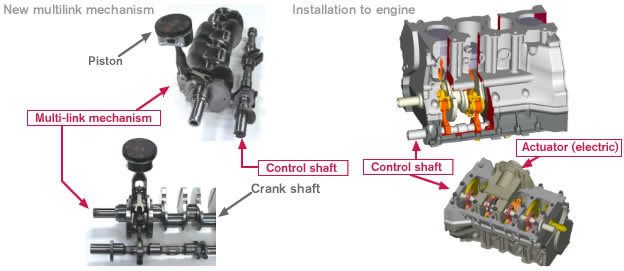
 | The newly developed piston/crank mechanism (multi-link type) enables optimum compression ratio control. |
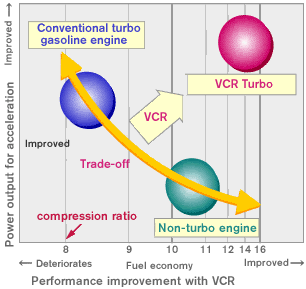
| For example, the fuel economy of a non-turbo engine and the power output of a turbocharged engine can be achieved in one engine. |
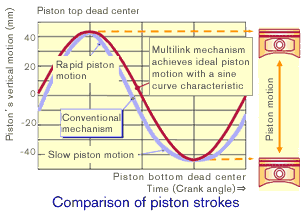
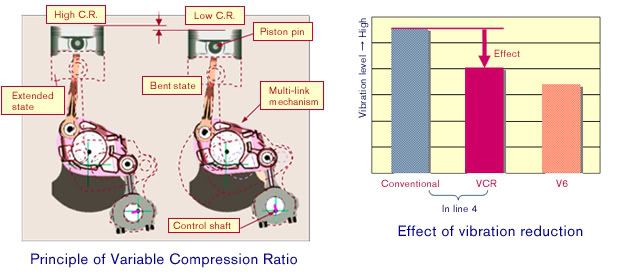
| By the ideal piston motion of multi - link, significant vibration reduction has been obtained. |
By applying multi-link mechanism, significant improvement of engine vibration coupled with friction reduction (basic condition of engine mechanism) have been obtained.
 And in addition, function of variable compression ratio control under engine running condition has been achieved.
Example of CR control (turbo engine)
Low vibration nature of multilink mechanism
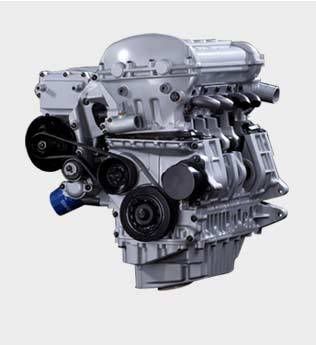
What is unique about the SVC engine is that it features variable compression. In other words, the ratio between the piston's displacement volume and the volume of the combustion chamber is not constant, as it is in a conventional engine. Instead, the SVC registers current needs and decides how much the mixture of fuel and air is to be compressed in the cylinder prior to ignition. The upper part, the mono-head, can be inclined up to four degrees to achieve optimum compression, which means that the engine always works at its most efficient level.


