


|
|
|---|


Thursday, May 27, 2010

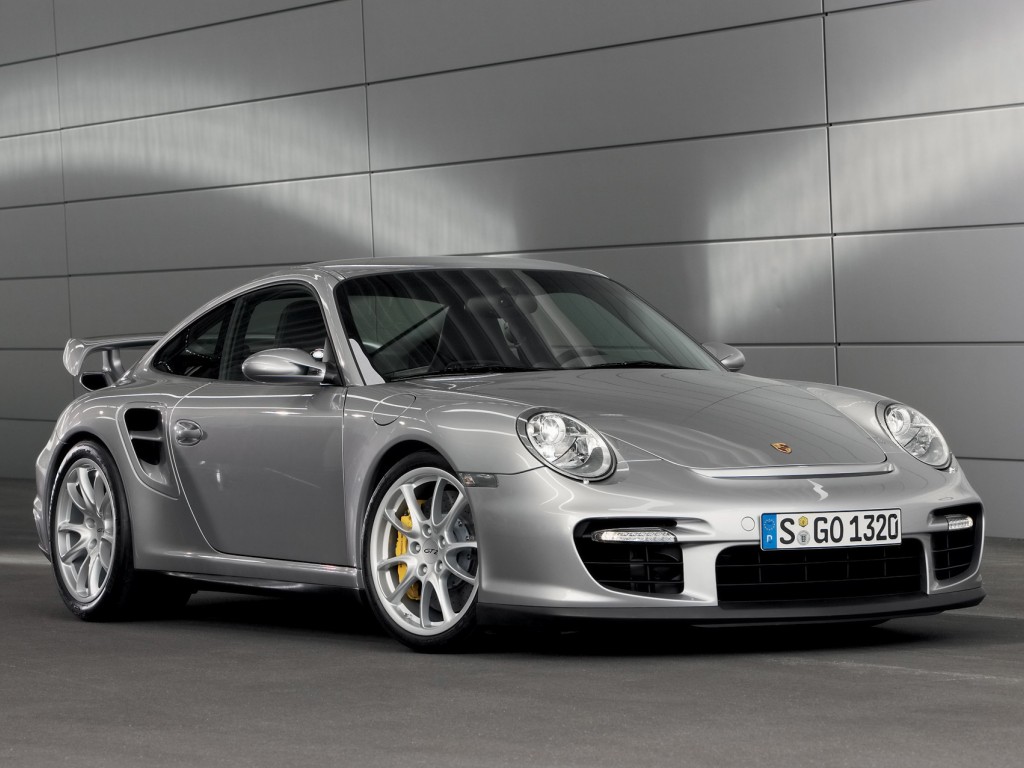
Known as the 2010 Porsche 911 GT3 R Hybrid, the model hints at new hybrid technology that Porsche Sports Cars will use in its motorsport ventures. According to Porsche, the 911 GT3 R Hybrid will be used as a study to gather information about how hybrid drive will behave under a racing environment and will also help the German automaker study how it can be applied to its road cars.

2010 Porsche 911 GT3 R Hybrid
During Porsche's press conference here at the Geneva Motor Show, most of our attention was understandably on the 918 Spyder Concept, but the German automaker had several other significant debuts. One was the 911 GT3 R Hybrid, Porsche's first race car to feature electric power sourced from a duo of motors that send power to a generator attached the flywheel. Like many hybrid production cars, the motors are charged whenever the brakes are applied, and the driver can use the extra power for 6-8 seconds for overtaking.

Exactly 110 years after Ferdinand Porsche developed the world's first car with hybrid drive, the Lohner Porsche Semper Vivus, Dr. Ing. h.c. F. Porsche AG, Stuttgart, is once again taking up this visionary drive concept in production-based GT racing: During the Geneva Motor Show, a Porsche Sports Cars 911 GT3 R with innovative hybrid drive is making its debut, opening up a new chapter in the history of Porsche with more than 20,000 wins in 45 years scored by the extremely successful Porsche 911 in racing trim.

Unlike a conventional battery-electric hybrid system the Porsche 911 GT3 R uses a flywheel system, which gathers kinetic energy under braking to power two electric-motors that are mounted in a single assembly and are connected to the front wheel. After each boost of charge, the two motors provide 6 to 8 second jolts of power. The extra power is engaged by pressing a button on the steering wheel, providing up to 161-hp to the front wheels, assisting the 911 GT3 R Hybrid’s 480-hp 4.0L inline-6 that powers the two rear-wheels.

The innovative hybrid technology featured in the car has been developed especially for racing, standing out significantly in its configuration and components from conventional hybrid systems. In this case, electrical front axle drive with two electric motors developing 60 kW each supplements the 480-bhp four-litre flat-six at the rear of the 911 GT3 R Hybrid. A further significant point is that instead of the usual batteries in a hybrid road car, an electrical flywheel power generator fitted in the interior next to the driver delivers energy to the electric motors.

The flywheel generator itself is an electric motor with its rotor spinning at speeds of up to 40,000 rpm, storing energy mechanically as rotation energy. The flywheel generator is charged whenever the driver applies the brakes, with the two electric motors reversing their function on the front axle and acting themselves as generators. Then, whenever necessary, that is when accelerating out of a bend or when overtaking, the driver is able to call up extra energy from the charged flywheel generator, the flywheel being slowed down electromagnetically in the generator mode and thus supplying up to 120 kW to the two electric motors at the front from its kinetic energy.

This additional power is available to the driver after each charge process for approximately 6 - 8 seconds. Energy formerly converted - and thus wasted - into heat upon every application of the brakes, is now highly efficiently converted into additional drive power.

Depending on racing conditions, hybrid drive is used in this case not only for extra power, but also to save fuel. This again increases the efficiency and, accordingly, the performance of the 911 GT3 R Hybrid, for example by reducing the weight of the tank or making pitstops less frequent.

After its debut in Geneva the 911 GT3 R Hybrid will be tested in long-distance races on the Nürburgring. The highlight of this test programme will be the 24 Hours on the Nordschleife of Nürburgring on May 15th and 16th. The focus is not on the 911 GT3 R Hybrid winning the race, but rather serving as a spearhead in technology and a 'racing laboratory' providing know-how on the subsequent use of hybrid technology in road-going sports cars.

The 911 GT3 R Hybrid is a perfect example of the Porsche Intelligent Performance philosophy, a principle to be found in every Porsche: More power on less fuel, more efficiency and lower CO2 emissions - on the track and on the road.


Wednesday, May 26, 2010

Porsche has unveiled the 2010 new Porsche 911 GT3 R. The 911 GT3 R will be raced in series based on the international FIA GT3 regulations, thus succeeding the 911 GT3 Cup S. The 911 GT3 R is powered by a four-litre six-cylinder boxer engine delivering maximum output of 480 bhp (353 kW) transmitted to the rear axle by a sequential six-speed dog gearbox.

2010 New Porsche Sports Cars 911 GT3 R
The GT3 R offers 30 bhp more than the Porsche 911 GT3 Cup model. Both cars are based on the extra-wide body of the 911 GT3 RS street-legal sports car.

Porsche AG continues to work deep into the 2010 competition season. The new Porsche 911 GT3 R replaces the 911 GT3 Cup S in the range of competing models of the brand. The 911 GT3 R participate in the tests based on international regulations FIA GT3. A sequential gearbox six-speed is responsible for transmitting that power to the rear axle.

It is based on the Porsche 911 GT3 Cup, presented in September 2009, and intended to compete in single-brand glass. With the increase in displacement at 0.2 liters, the GT3 R achieves 30 hp increase in power compared to GT3 Cup racing Both vehicles take the widened bodywork of the 911 GT3 RS series.

The antilock brake system (ABS), traction control and electronic throttle prepared to adapt the engine speed in each gear change, making it much easier driving in relation to its predecessor, so this new model will also most appropriate for amateur drivers.

The Porsche 911 GT3 R weighs 1,200 kg, comes with an anti-lock brake system (ABS), traction control and an e-gas with “throttle-blip” function make it much easier to get used to this new GT3 racing car than its predecessor, meaning that the new model is also more appropriate for the ambitious amateur racing driver.

The flared wheel arches, both in the front and the rear channels show a higher compared with the previous model. The underside of the vehicle are fully lined and features a rear diffuser. The possibilities of regulating the rear wing have also been increased. The race suspension has several settings.

Front, McPherson has a structure adjustable in height, with SACHS shock variables and two-way dual dock. Behind, the GT3 R has a highly rigid sub-frame, with a multilink axle adjustable height and the Sachs shock absorber adjustable two-way dual dock.

The Porsche 911 GT3 R is making its world debut on 14 January 2010 at the Birmingham Motor Show and the price is 279,000 Euros.
 2010 Lincoln Mark LT
 2010 Lincoln Mark LT side view
 2010 Lincoln Mark LT Interior
Tuesday, May 25, 2010

Hamann has released the all new BMW Z4 Roadster enhancing it with the tuner’s comprehensive program of some cosmetic and performance upgrades. With exciting bodywork styling, striking rim designs and powerful performance improvements, Hamann promises a broad palette of customization options for the roadster fans.

2010 Hamann Sports Cars BMW Z4 Roadster
Just in time for the start of the cabrio season, Hamann Motorsport is introducing a comprehensive programme for accessories and modification of the current BMW Z4 Roadster, known internally as the E89. The broad palette of customisation options for the roadster with the fold-away hardtop includes exciting bodywork styling, striking rim designs and powerful performance improvements.

The Hamann aerodynamics programme is characterised by top-quality workmanship on body components with impressive design and optimised airflow over the vehicle silhouette: The specialists have replaced the series production front spoiler on the front axle with an in-house development that features two integrated LED day lamps. Striking side skirts between the front and the rear impress with a convincing design concept, and lend the Z4 an even lower and longer appearance. The lift force on the rear axle is reduced by a Hamann technical development that sees a shapely spoiler mounted on the tailgate. A new rear apron completes an impressive overall appearance and makes space for the four tailpipes responsible for the throaty sound of the Hamann sports car exhaust system.

The Hamann engine specialists have developed a powerful performance improvement for the BMW Z4 sDrive35i engine, which also lifts the 250 km/h limitation. The optimisation of the series production control device has resulted in performance figures of 360 hp / 265 kW at 5230 rpm (standard is 306 hp / 225 kW at 2500 rpm). The maximum torque simultaneously increases to an impressive 540 Nm, which is available in the engine speed range of 1300 to 5000 rpm (standard is 400 Nm at 1300 - 5000). This modification results in a top speed of 285 km/h.

One of the technical highlights in the comprehensive range of wheels is the three-part Hamann light alloy wheel known as the Edition Race "Matt Black". The 20" forged wheel combines sportiness with elegance. The matt black, polished spoked rims and the titanium screw joints accentuate the wheel dynamics, while the highly polished rim flange makes for a sophisticated impression.

Hamann is offering the wheel/tyre combination of 8,5Jx20 inch including 235/30ZR20 front tyres with 10,0Jx20 rims plus 295/25ZR20 back tyres from 7,640 Euro. Extra focus is on the new aluminium wheels with special chassis springs that allow the centre of mass on both the front and back axles of the Z4 Roadster to be lowered by 30 millimetres. Handling of the sports car is simultaneously enhanced.

For the interior, Hamann Motorsport has come up with subtle internal applications. The aluminium gear knob and the set of foot mats with the silver stitched Hamann logo provide a sporty look. On request, hand-made complete leather fittings in line with the exclusive demands of every BMW Z4 Roadster driver can also be supplied.


Monday, May 24, 2010

For parts of the world that are growing increasingly urban, the future of the automobile looks small, green, smart and fun in the eyes of Ford designers who created the Ford Start Concept. It's a design vision inspired for the transportation needs of the world's mega cities.

2011 Ford Start Concept
Making its global debut at the 2010 Beijing Auto Show, the Ford Start Concept is more than simply a design exploration into the feasibility of a small car. It also demonstrates how Ford will extend the promise of its EcoBoost engine technology story even further – previewing a fuel-efficient petrol Ford EcoBoost engine with just three cylinders and 1.0 litre of displacement, yet the power of a larger, 1.6-litre I4 engine.

Start Concept was inspired in part by a growing global trend toward mass urbanisation. The world's top 20 mega-cities are home to consumers whose needs, attitudes and expectations may have more in common with mega-city dwellers in other nations than with their own countrymen. While these consumers share the challenges of living in an urban society, they also increasingly seek out product solutions that bring the best the world has to offer.

When it comes to designing eco-friendly urban transportation, automakers have tried just about everything. They've drawn up bubble cars, autonomic pods, even semi-robotic unicycles. Ford however, has decided against cribbing from the pages of a sci-fi novel and opted for something far more conventional: a three-door hatchback. Specifically, the Start concept the automaker unveiled at the 2010 Beijing Auto Show.

“Our ambition was to design a car that transcends the practical realities of commuting in these mega cities, and goes beyond just dressing the technology,” said Freeman Thomas, design director. “We wanted to design a car you would also love.”

There’s little not to love about the Start, Ford’s first concept in three years, and the first developed under the global auspices of the “One Ford” mantra. Although the Start shows traces of Ford’s “kinetic” design language, its rounded form is much more elegant. Angular edges are limited to both the shoulder lines and the slender, LED-powered headlamp and taillights. Thomas says the Start features “refined surface language” usually found on premium vehicles, and we’d agree -- from some angles, the Start almost resembles Audi’s new A1.

Function doesn’t necessarily follow form, however, as stylists made an effort to improve the car’s aerodynamics. Many surfaces, including the windshield, side window glass, and center stop lamp, are flush with the body, while an underbody aero pan further reduces the Start’s drag. The interior is as equally stylish and functional -- the floating dual-cockpit dashboard lends a sporty look, but a conceptual infotainment system, billed as “MyFord Mobile,” incorporates a multi-function touch screen to simplify the center stack.

While the Start’s form allowed Thomas’ team to flex their creative muscle, the mechanicals beneath the car are firmly rooted in reality. Ford’s teased the idea of an EcoBoost three-cylinder, but this is our first look at such an engine. The turbocharged, 1.0-liter I-3 utilizes a cast-iron block, but a cylinder head and sump fabricated from cast aluminum. Ford won’t talk power figures, saying only that early tests suggest it can produce power on par with its 1.6-liter I-4, which is rated at 120 horsepower in North America. Power is routed to the front wheels via an ordinary five-speed manual transaxle.

Created by a global team of designers working at Ford's Irvine (Calif.) Strategic Concepts Group Studios, this sporty, futuristic concept combines near-production Ford EcoBoost engine technology and slick aerodynamics in an environmentally friendly package with reduced greenhouse emissions, all wrapped in an exciting design.

Ford says the EcoBoost three-cylinder would allow the Start to emit well under 100 grams of carbon dioxide per kilometer. That’s not a crucial figure here in North America, but it is in Europe, where Ford sells the similar-sized Ka. We doubt the Start is destined for production anytime soon, but look for the turbo-three to land in some small European Fords in the near future.

“The Ford Start Concept is the first pure concept we’ve developed under our ‘One Ford’ approach,” says Moray Callum, executive director, Americas Design. “J Mays, Martin Smith and I worked with Freeman and his team to deliver a concept that visually reinforces the fun to drive element that is at the core of the Ford brand DNA.”

Subscribe to:
Posts (Atom)


