


|
|
|---|


Monday, April 27, 2009

The recently baptized Rolls Royce Ghost made its debut at the Concorso d'Eleganza gathering at Lake Como, Italy. The above photo comes courtesy of the folks over at German car magazine Auto Motor und Sport that claim in their article that is the 'series version' of the 200EX concept. From our part, aside from the never before seen exterior color, we couldn't spot any differences between the 200EX and the Ghost. Then again, the Geneva Show 200EX concept wasn't much of a concept so go figure.
In any case, Rolls Royce's new "entry-level" luxury sedan that features a new 6.6-liter turbocharged V12 engine sending over 507 horsepower to the rear wheels through an 8-speed automatic transmission will go on sale in the beginning of 2010.
Via: AMS
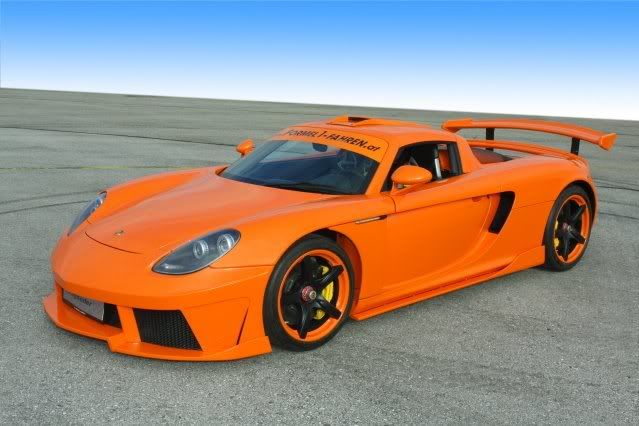
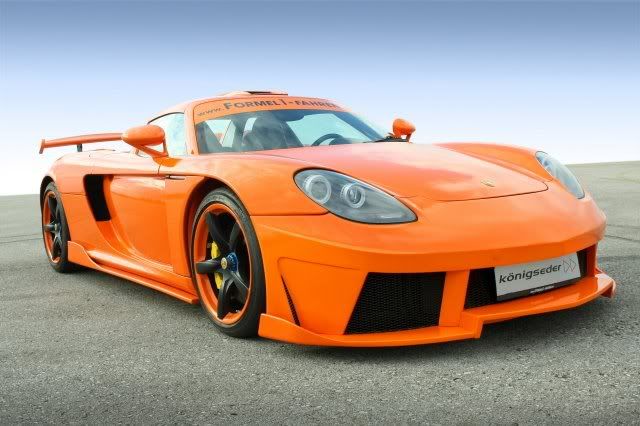
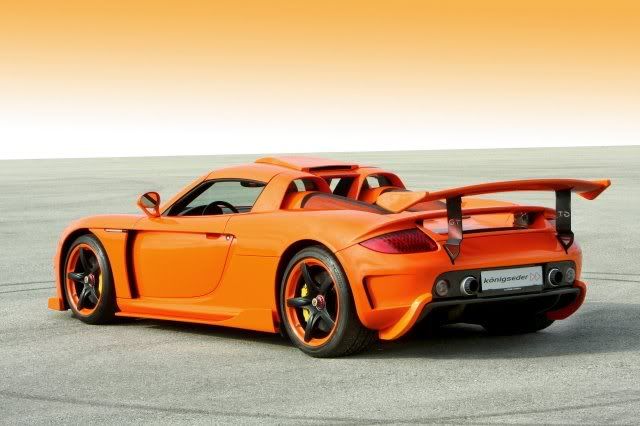
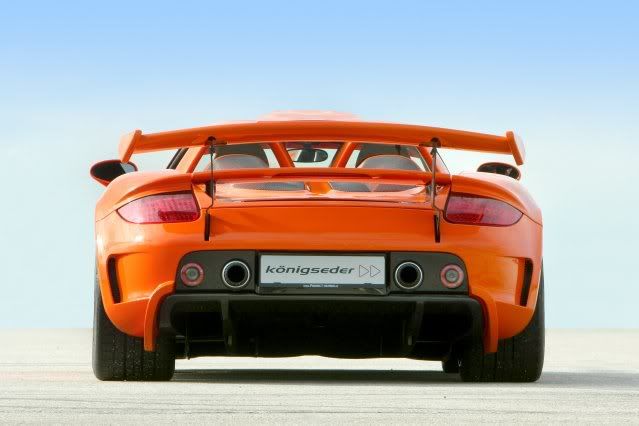
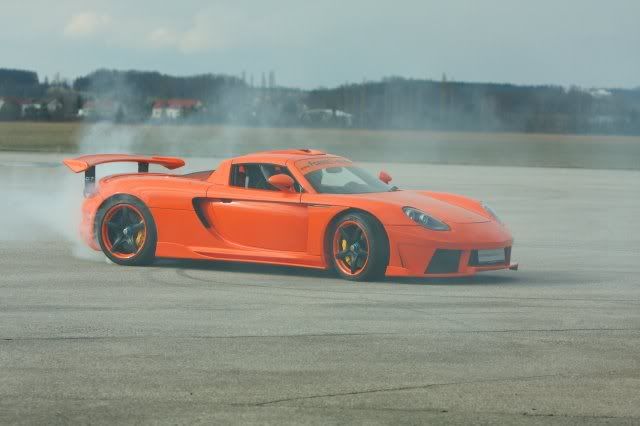
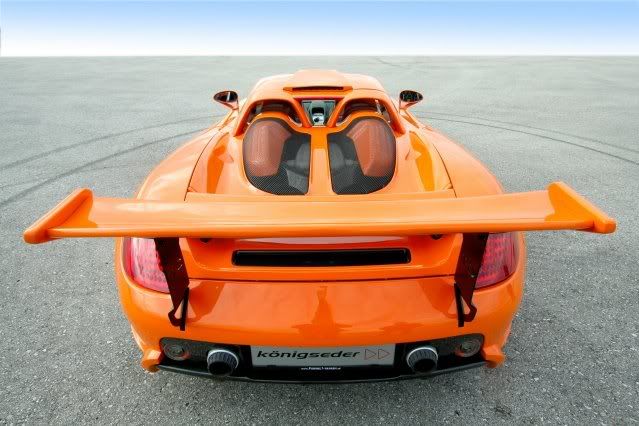
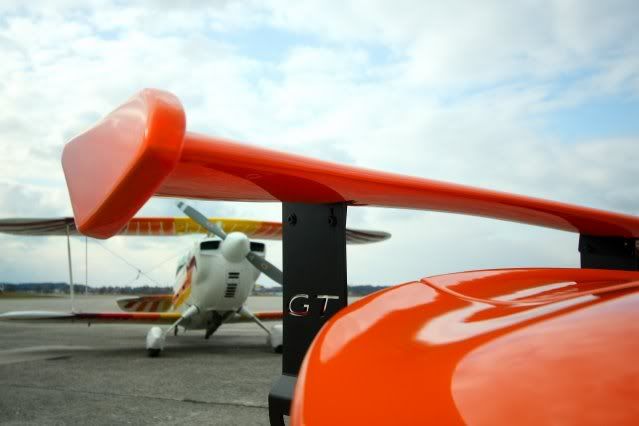
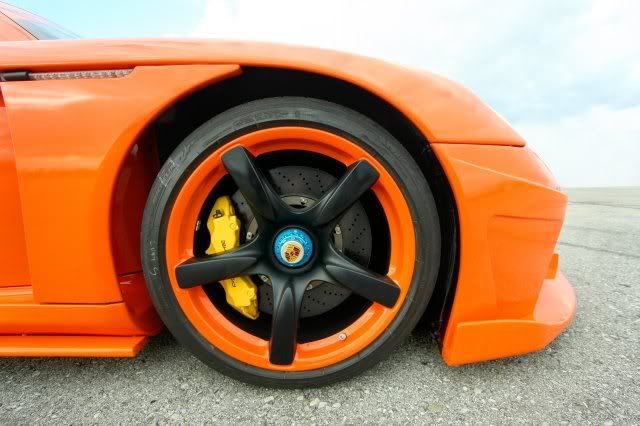
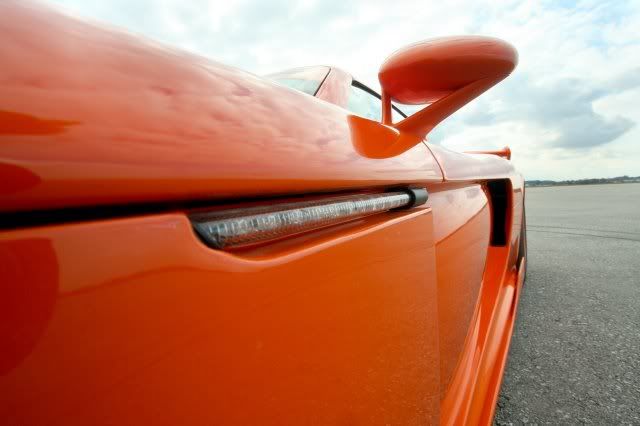
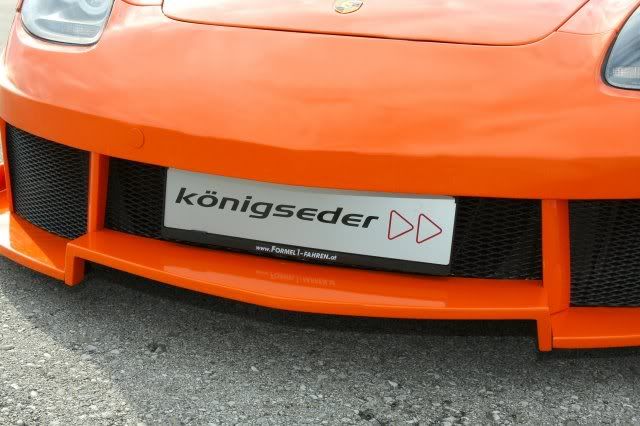
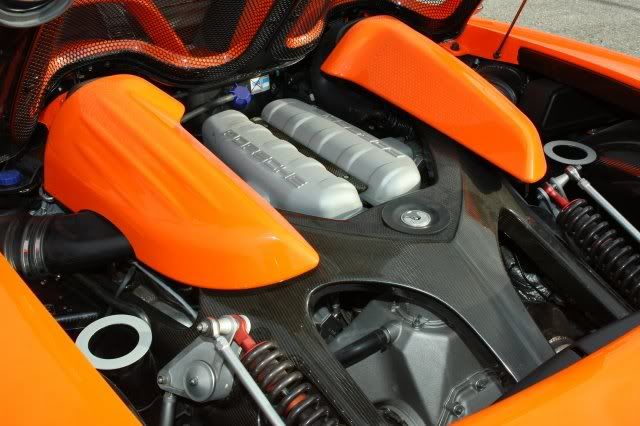
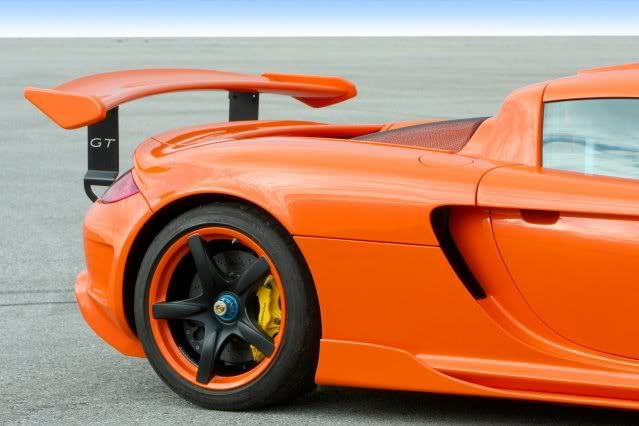
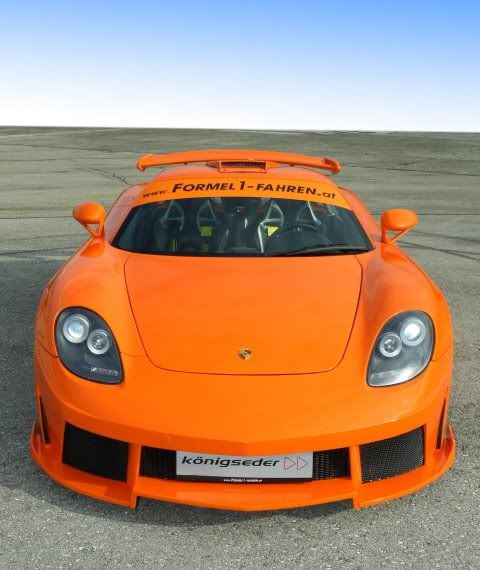
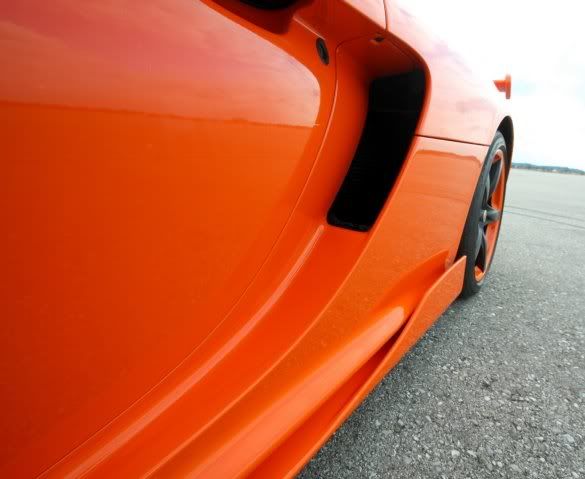
Included in the aero kit are a newly designed front bumper that kind of reminds us of the Lamborghini Reventon, a new rear bumper with a larger diffuser and extra air vents, an awkward looking, giga-sizes fixed rear wing that puts to rest the factory pop-up spoiler, chunkier side skirts and a newly styled removable roof panel.


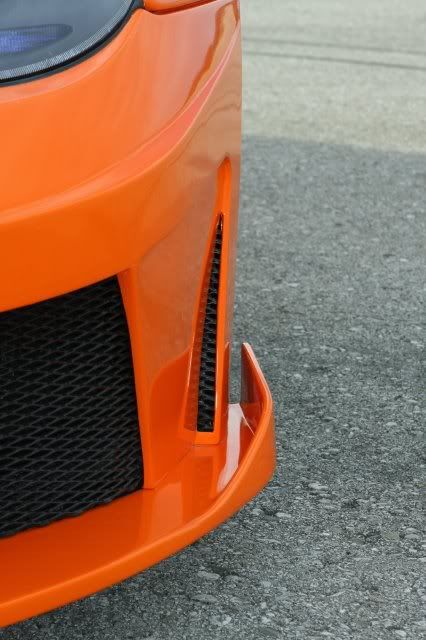
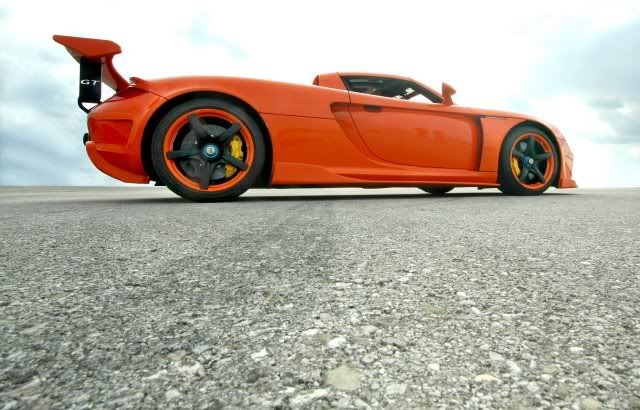

The Aston Martin One-77 is a sports car by Aston Martin. It first appeared at the 2008 Paris Motor Show, although the car remained mostly covered by a "Savile Row tailored skirt" throughout the show.[1] The One-77 was fully revealed at the 2009 Geneva Motor Show. The One-77 will feature a full carbon fibre monocoque chassis, a handcrafted aluminium body, and a 7.3 litre V12 engine with over 700 hp (520 kW). It will have a limited run of 77 units with delivery starting in October 2009.
Prior to the One-77's Paris Motor Show debut, the website 925.nl had leaked various details about the car. In addition to the now official information listed above, the article revealed the One-77 will cost approximately £1,050,000. The engine will be naturally aspirated, and the car will have a 6-speed automated manual transmission, height-adjustable suspension, dynamic stability control and carbon-ceramic brakes
.According to the Australian newspaper, The Courier-Mail, it is expected to be priced at around AU$2.6 million.[6]
According to the British magazine, Top Gear, it is to be priced at £1,200,000.


Saturday, April 25, 2009

src="http://pagead2.googlesyndication.com/pagead/show_ads.js" type="text/javascript">
The Ford Transit Connect is a small and boxy European commercial vehicle. It's hugely successful and Ford is bringing it to the U.S. market this summer. For a vehicle that can carry 135 cubic feet of stuff, the base price of $21,475 is very business-friendly. Throw in its 22/25 mpg EPA fuel economy ratings and it makes good economic sense compared to a full-size Ford E-series van. Its little 2.0-liter inline-4 engine mated to a 4-speed automatic transmission isn't very exciting, but it's durable and wallet-conscious.

A feature that adds a new level of family organization is the RFID tag system adapted from Ford's Tool Link technology used for keeping track of a work truck's parts inventory. Instead of tools, however, the Family One keeps track of all the kids' stuff. Before leaving the driveway the computer can verify that the kids and all their stuff are onboard.

For now, it's very much a concept, says Joe Rork of Ford's computer research department. What's certain is the commercial version with a four-cylinder engine and manual transmission arrives this summer. The concept was created to judge consumer reaction and no decision has been made on production. With some of the costlier frills eliminated, this might be unusual enough to be popular among the crowd that 15 years ago thronged to minivans. It might even make consumers forget Ford's woeful Windstar minivan. Details on the Ford Transit Connect Family One after the jump.


The simple design and use of vibrant colors is meant to appeal to kids. The technology to recognize when a child seat isn't mounted properly is meant to appeal to the parents, and if Ford works it right, a price of just over $20,000 would appeal to the family budget.
Friday, April 24, 2009


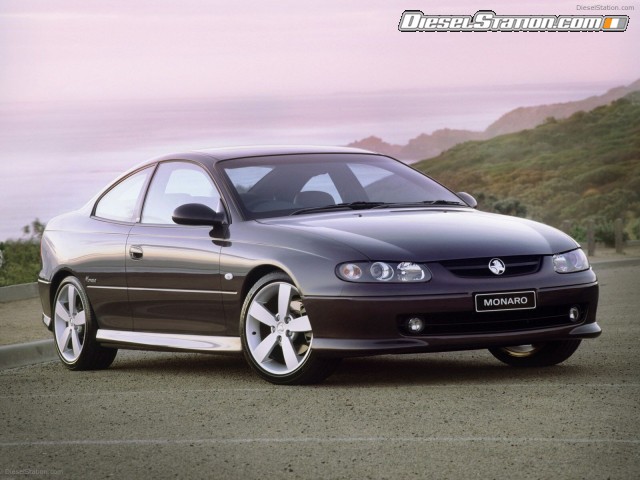

 The Holden Monaro
Fans of the Falcon GT and Valiant Charger may have derided the Monaro, but it was because of the competition, both on the race track and at the showroom, that 1970’s Australia offered such a wonderful array of quality performance machinery. They were always highly desirable, and inevitably they became highly collectable. Will the lucky owners of the V2 and VZ Monaro’s appreciate they are merely “breaking in” the collectables of tomorrow. We hope so.
The Monaro is an automobile which was produced by Holden, the Australian branch of General Motors from 1968 to 1977 and then re-introduced onto the Australian and New Zealand markets in 2001. It was discontinued in late 2005. Since 1968, three generations of the Monaro have been produced.




 The Holden Camira Pictures
A station wagon version was introduced the following year, and its bodywork was exported to Vauxhall in the United Kingdom for the Cavalier wagon.[2] Some Camiras were also exported to right-hand drive markets in Southeast Asia, such as Indonesia and Singapore. The wagon variant was specifically a Holden design, and was actually a major demand Holden had in the overall "J-car" program. A five-door hatchback, based on the Opel Ascona/Vauxhall Cavalier "J-car" was proposed for the Camira, however due to Holden's financial losses at that time it never made production. There was only one engine, the carburettored, naturally-aspirated, transversely-mounted 1.6 litre four-cylinder engine delivering 64 kilowatts (86 hp). The transaxle offering was a four-speed manual on the SL and SL/X, with a five-speed unit specified to SJ and SL/E variants. A three-speed automatic with lockup torque converter was optional on the base model, but standard on the SL/E.
The Camira was Wheels magazine's Car of the Year for 1982. While superior to most other cars of the day in terms of ride and handling, the 1.6 litre Camtech engine was regarded as "underpowered" by much of the motoring media, and the Camira suffered from a litany of quality control issues which included smoking engines in early models, lack of drainage holes in the doors, paint quality and lack of adequate fan cooling resulting in overheating in Camiras fitted with air conditioning. This tarnished the Camira's reputation. Camira first came out as the JB series in August 1982 and promptly received a car of the year award, mainly because the judges loved its Euro-like handling and feel. A world car in the General Motors empire, it was built in Australia but carried a fair bit of imported design. This meant that in some ways it wasn’t totally suited to local conditions, particularly in the outback.
These mid-size Holdens have a good cabin with space for four/five adults if they don’t mind juggling the seats to make space for one another. There’s a large luggage area, with the Camira station wagon being a particularly good load carrier. In November 1984, while it was still flying high on the new-car scene, the Camira received a rather controversial sloped-nose facelift for the JD version. Holden backed off and the shape became more conventional in style with the JE in April 1987. Initially all Camiras were four-door sedans. In April 1983 a spacious five-door station wagon was added to the range. Interestingly, the wagon was an Australian design (the sedan was penned overseas) and all wagon rear ends were built here, even those sold in European markets.


 The Holden Torana Pictures
The next generation of Toranas appeared in October 1969 and were available with either a four or six cylinder engine. The inline six had a capacity of 138 in. The six-cylinder cars had a longer wheelbase of four-cylinder models, a more aggressively styled slightly longer nose to accommodate the larger engine, and offered a choice of three and four-speed manual gearbox or a three-speed Trimatic automatic transmission. The Torana was Wheels magazine's Car of the Year for 1969.
Body styles were all new and available in either two or four doors, and were offered in S or SL trim. Bench or bucket front seats were also an option, along with disc front brakes. A more-powerful 161 in³ engine was made available soon after the model's release in the more upmarket SL and in the two-door sports model, the GTR, as a 2600S with a two-barrel Stromberg WW carburettor. Later in production, the 161ci engine was replaced with a larger 173ci version (badged as the '2850') which also made it into the last of the LC GTR cars in two-barrel form.
In 1970 the first genuine performance Torana, the GTR XU-1, was developed by Holden along with Harry Firth of the Holden Dealer Team for competition in popular Series Production racing series in Australia as well as in off-road rallying. However, the main purpose of the Torana GTR XU-1 was to keep Holden competitive against the big and powerful Ford Falcon GT-HO V8s in the Hardie-Ferodo 500 (Bathurst) endurance race that is considered to be the jewel in the crown of Australian motorsport.


